What I work on
Research
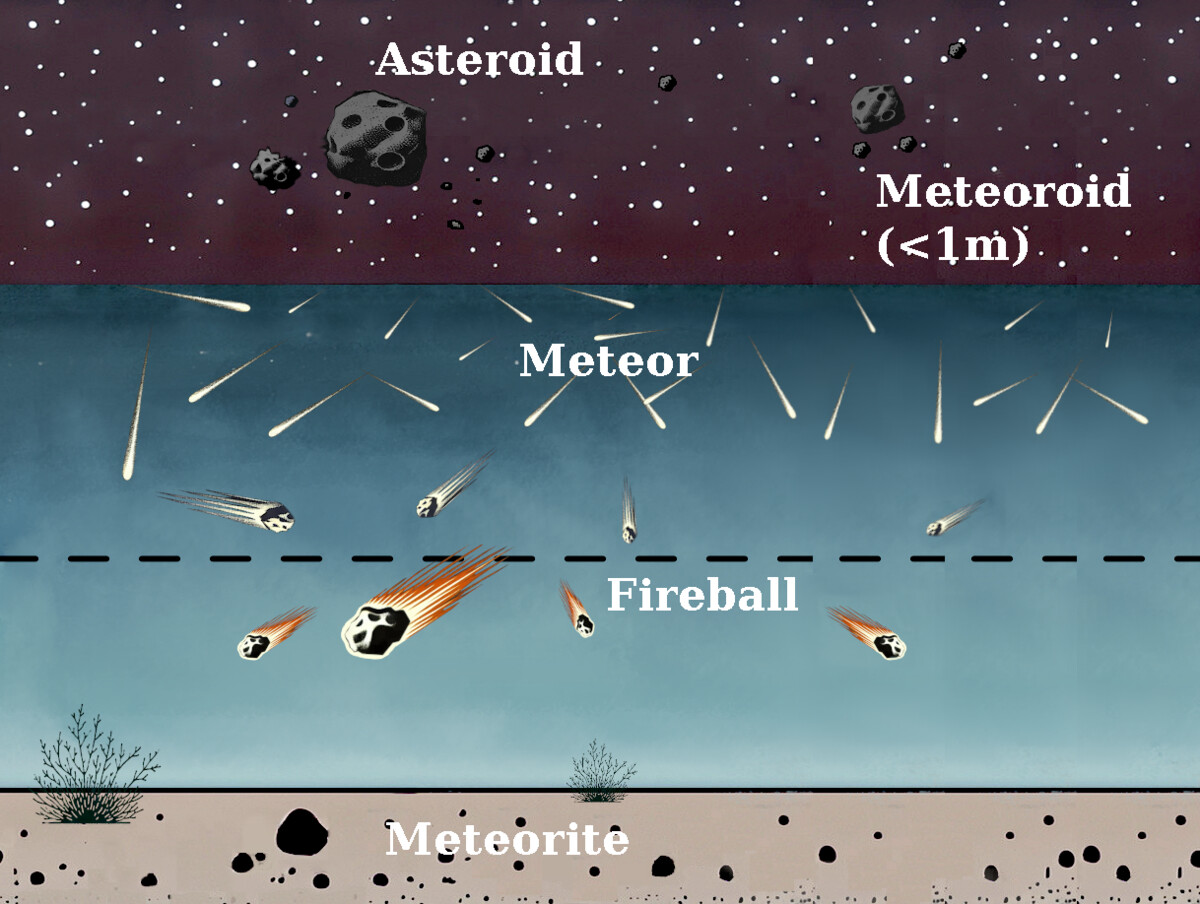
I study how small bodies deliver material to Earth, connecting what
telescopic surveys see in space, what wide-field camera networks catch coming in,
and what we analyze in the lab afterwards. Across all of it, what reaches the
ground is only a filtered sample of what actually hits Earth.
Planetary defense & the decametric gapMulti-sensor fusion (radar · optical · infrasound)Meteorite recovery & fireball networksSmall-body dynamics & orbital statisticsMixing of cometary & asteroidal reservoirsPrimitive carbonaceous material & its survival
Methods · New shower, ApJ 2026
Finding meteor showers that aren't there
How you tell a real meteoroid family from a coincidence — background models, cumulative similarity, and the 5.3σ detection of a new near-Sun stream. With four interactive tools built on the real data.
Flagship · Nature Astronomy
Perihelion filtering & the meteorite record
Why meteorite collections are a thermally and atmospherically filtered subset of what actually hits Earth, and where the carbonaceous chondrites went.
Small-body dynamics
Cometary ↔ asteroidal reservoir mixing
Most “comet-like” fireballs come from asteroidal material, not comets: long-term integrations show the near-Earth Jupiter-family population is dominated by asteroidal interlopers.
NASA · MetDetect
Sensor fusion & radar meteorite detection
Turning the NEXRAD weather-radar network into an automatic meteorite-fall detector, and working toward fusing radar, optical & infrasound to close the 10–100 m “decametric gap.”
FRIPON · GFO · DFN
Meteorite recovery & fireball networks
Fireball-network science across the full chain, from astrometry and orbits to drone- and ML-assisted recovery of fresh, orbit-bearing meteorites.